

This summary provides abridged excerpts from a collection of resources summaries found on the website.
United States’ Live Animal Imports and Exports from 2018-2022
Original Summary by Felipe A. Scheihing C.
The Economic Research Service of the U.S. Department of Agriculture (ERS) provides monthly and yearly data on imports and exports of various farmed animals (livestock) and meat products, such as cattle, hogs, sheep, goats, beef, veal, pork, lamb, mutton, chicken meat, turkey meat, and eggs. The ERS data set is based on data from the U.S. Department of Commerce, Bureau of the Census, and Foreign Trade Division.
Using a subset of this data, the ADP visualizes the United States’ import and export of live cattle and hogs between 2018 and 2022. This information is presented through a line graph showing trade trends for different countries. The visualizations also breakdown the percentage of imports and exports by country using a pie chart.
The data subset used for this analysis is available by clicking the Download tab on this chart. Note: to view this visualization third-party cookies must be enabled.

Fitness for Transport of Cull Dairy Cows at Livestock Markets
Original summary by Marci Regambal
To maintain profitability, dairy cows are removed from herds for a variety of reasons and often sent to livestock markets. Information gathered from weekly visits to two Canadian livestock auction markets from May 2017 to April 2018 found that 29.2% of cows had one or more conditions that could affect fitness for transport. Specifically, 10.3% were very thin, 11.9% were overweight, 59.5% displayed abnormal movement, 87.2% had a loose udder, 9.7% had an engorged udder, and 3.0% had a swollen/inflamed udder. Cows with these health conditions were observed more frequently in some summer and fall months, suggesting that when milk demand is higher, farmers keep cows that would otherwise be removed.
A strength of this study was using multiple observers to rate the condition of the cattle, allowing for inter-rater reliability ratings. A limitation is that data are limited to livestock markets that were willing to participate in the study, which might not represent all markets. As the authors note, these results suggest that the supply-management system can encourage farmers to keep cows to the point that their welfare is significantly compromised. Furthermore, fitness-for-transport guidelines should be used to help farmers’ improve their decision making regarding animal transport and to promote other options (e.g., emergency slaughter).
European Food Safety Authority’s Scientific Opinion on Welfare of Cattle During Transport
Original summary by Susan Stork
Note: This summary was prepared from the Plain Language Summary and the Summary and Abstract sections of the full article.
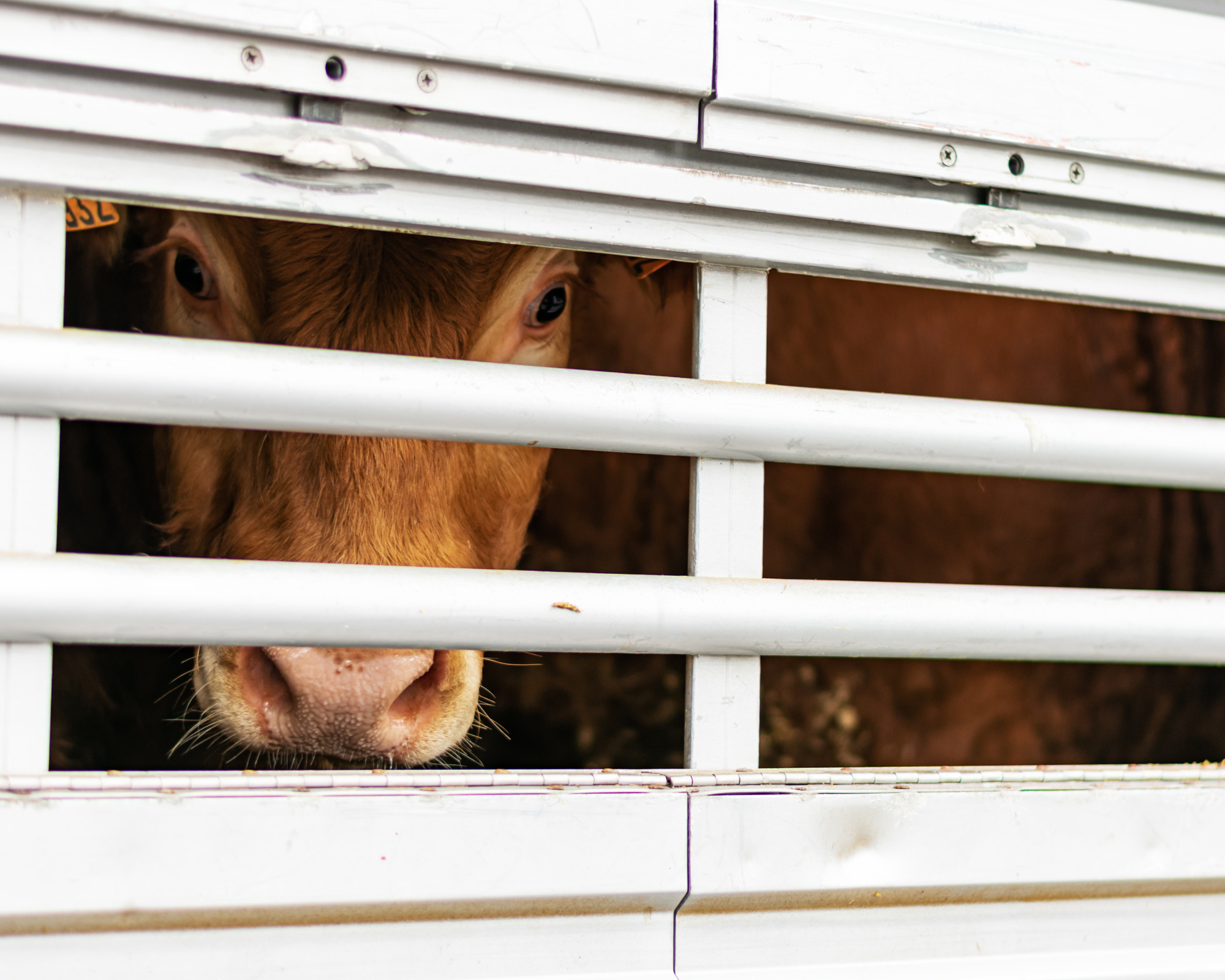
This report was prepared by the European Food Safety Authority (EFSA) Panel on Animal Health and Animal Welfare (AHAW) for the European Commission. The purpose of the report was to provide an opinion on the protection of cattle (including un-weaned calves and cull dairy cows) during transport and to provide recommendations that will reduce hazards and alleviate welfare consequences. The AHAW Panel reviewed peer-reviewed and gray literature, as well as animal movement statistics from the EU’s TRACES database. The data used spanned 2011 to November 2021.
While the report focused mostly on road transport, the most common mode of transport for cattle, other forms of transport were also included in the Opinion such as by sea, air, and rail. Four stages of transport were used to assess the method of transportation: preparation, loading/unloading, transit, and journey breaks. Welfare consequences (WCs), animal-based measures (ABMs), and hazards leading to welfare consequences were used in the assessment.
Eleven WCs were identified as being highly relevant based on their frequency, severity, and duration; however, the frequency and occurrence of some WCs depended on the stage, type of transport, and duration of the journey. The WCs were: “(i) group stress, (ii) handling stress, (iii) heat stress, (iv) injuries, (v) motion stress, (vi) prolonged hunger, (vii) prolonged thirst, (viii) respiratory disorders, (ix) restriction of movement, (x) resting problems and, (xi) sensory overstimulation.” The report identified negative affective states experienced by cattle from the WCs such as fear, distress, pain, discomfort, frustration, and fatigue. While ABMs were developed for each WC to determine the animal’s condition, the Panel recognizes that these ABMs are difficult to use when the animal is in a transport vehicle. The report goes into detail on the specific ABMs.
Hazards, which lead to WCs and negative affective states in cattle, were identified for each WC and transport stage. Not enough space to move around in the vehicle, extreme heat conditions, inexperienced/untrained handlers, poor driving and road conditions, and inappropriate handling, among other things, were identified as factors contributing to hazards. Additionally, the Panel emphasized the need for a standardized and agreed upon scientific definition for an animal’s transport fitness. This would ensure that an animal is fit enough for transport and can be used as a preventative measure for many of the hazards.
The Opinion explains in further detail the conditions for which an animal would be deemed unfit for travel and urges that animal handlers, including farmers, drivers, stockpersons, and veterinarians, should be trained and educated on how to assess an animal’s fitness for travel. Other preventative measures for hazards for each stage of transport are detailed in the report and include avoiding loading animals on the trucks during hot temperatures and establishing and maintaining proper facilities for the animals.
A critical temperature limit of 25 degrees Celsius was identified for transport vehicles, beyond which animals will start to experience negative affective and physiological states, such as heat stress. Providing more horizontal and vertical space on transport vehicles was listed as a measure that may alleviate heat stress, but also reduce injuries and falls and allow the animals the ability to lie down and get up. The report also identified the duration of journeys as a significant contributor to the exposure of hazards such as fatigue, dehydration, fear, and distress. After nine hours, negative affective and physiological states resulting from thirst start to appear, even if the vehicle is outfitted with water drinkers, and after 12 hours hunger symptoms appear, all of which can lead to suffering.
The recommendations provided in the Opinion to reduce the number of hazards leading to WCs include, among others, limiting the duration of transport journeys, having a minimal space allowance for animals, recognizing that motion stress and overstimulation begin as soon as the transport vehicle starts moving and unloading rest breaks should be considered, handling animals sympathetically, and exploring options to keep the temperature inside the transport vehicle at a comfortable level. The Opinion also provides specific recommendations for transporting un-weaned dairy calves and cull dairy cows (who are already experiencing health issues), as these categories of animals present additional challenges and concerns due to their vulnerable health status.